
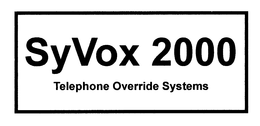
USPTO serial 75645176
SYVOX 2000 TELEPHONE OVERRIDE SYSTEMS
Reviewed by CopyMark Law Group
Reg. 2616176Status 710
- Filing date
- Status date
- Registration date
- Sep 10, 2002
- Examiner
- FROMM, MARTHA L
- Law office
- SCANNING ON DEMAND
What this means
Status 710 means the registration was cancelled because a required Section 8 declaration of continued use was not filed within the deadline (including any grace period). The federal registration is no longer active. Evaluate filing a new application if you still use the mark, or petition if cancellation was erroneous. Consult counsel on remaining common-law rights.
Need help with SYVOX 2000 TELEPHONE OVERRIDE SYSTEMS?
If you own this trademark, we can monitor new filings and help with USPTO deadlines. If you do not, we can file a new U.S. application.
Current trademark owner
Monitor this mark, or talk with CopyMark about this registration.
Not the owner?
File a new U.S. trademark application, or speak with our attorneys.
Owner
Goods and services
| Class | Description | Status | First use |
|---|---|---|---|
| 009 | computer hardware and man to machine interfacing software for use in scheduling, controlling and monitoring environmental conditions of a building or complex via telephone systems | SECTION 8 - CANCELLED | Sep 1, 1988 |
Related trademarks
CopyMark links this record to cited §2(d) serials, the owner's other marks, Nice classes, similar mark names, and recently changed USPTO applications.
- Other trademarks owned by Nash, Francis J., Jr.
- Other trademarks owned by Nash, Francis J., Jr.
- Other trademarks owned by Nash, Francis J., Jr.
- Other trademarks in Class 009
- Similar marks named SYVOX 2000 TELEPHONE OVERRIDE SYSTEMS
- Recently changed USPTO trademarks
- Recently filed trademarks
- Browse all trademark records
Prosecution history
| Date | Code | Event | What it means |
|---|---|---|---|
| May 16, 2009 | C8.. | CANCELLED SEC. 8 (6-YR) | — |
| Jan 16, 2008 | CFIT | CASE FILE IN TICRS | — |
| Sep 10, 2002 | R.PR | REGISTERED-PRINCIPAL REGISTER | Your trademark is registered on the Principal Register — the strongest form of federal trademark protection. You may use the ® symbol for the covered goods and services. Maintenance filings (Section 8 and renewals) are required to keep the registration alive. |
| Aug 25, 2002 | TCCA | TEAS CHANGE OF CORRESPONDENCE RECEIVED | — |
| Jun 18, 2002 | PUBO | PUBLISHED FOR OPPOSITION | Your mark was published in the USPTO Official Gazette for a 30-day opposition window. During that period, third parties who believe they would be harmed can file an opposition. If no opposition is filed, prosecution usually continues toward registration or a Notice of Allowance. |
| May 29, 2002 | NPUB | NOTICE OF PUBLICATION | — |
| Mar 4, 2002 | CNSA | APPROVED FOR PUB - PRINCIPAL REGISTER | — |
| Mar 1, 2002 | CNEA | EXAMINERS AMENDMENT MAILED | — |
| Aug 30, 2001 | CRFA | CORRESPONDENCE RECEIVED IN LAW OFFICE | — |
| Mar 28, 2001 | CNRT | NON-FINAL ACTION MAILED | A non-final Office Action means the USPTO examining attorney has raised at least one issue with your trademark application but has not made a final decision. You usually have three months to respond with arguments, amendments, or evidence. Missing the deadline can abandon the application. |
| May 12, 2000 | CNSL | LETTER OF SUSPENSION MAILED | — |
| Mar 16, 2000 | CRFA | CORRESPONDENCE RECEIVED IN LAW OFFICE | — |
| Nov 26, 1999 | CNRT | NON-FINAL ACTION MAILED | A non-final Office Action means the USPTO examining attorney has raised at least one issue with your trademark application but has not made a final decision. You usually have three months to respond with arguments, amendments, or evidence. Missing the deadline can abandon the application. |
| Oct 12, 1999 | CRFA | CORRESPONDENCE RECEIVED IN LAW OFFICE | — |
| Jul 7, 1999 | CNRT | NON-FINAL ACTION MAILED | A non-final Office Action means the USPTO examining attorney has raised at least one issue with your trademark application but has not made a final decision. You usually have three months to respond with arguments, amendments, or evidence. Missing the deadline can abandon the application. |
| Jun 17, 1999 | DOCK | ASSIGNED TO EXAMINER | — |
| Jun 10, 1999 | DOCK | ASSIGNED TO EXAMINER | — |