
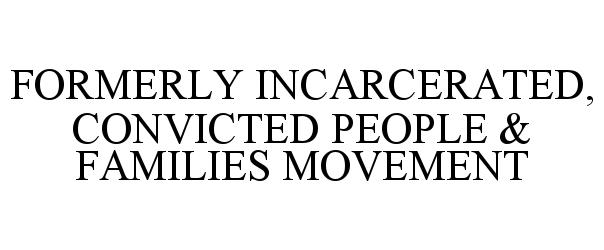
USPTO serial 50020930
FORMERLY INCARCERATED, CONVICTED PEOPLE & FAMILIES MOVEMENT
Reviewed by CopyMark Law Group
- Filing date
- Status date
- Registration date
- —
- Examiner
- LAVOIE, RYAN CHRISTOPHER
- Law office
- TMEG LAW OFFICE 108
What this means
The USPTO has issued an Office Action on this application. A response is typically required before the deadline, or the application can be abandoned.
Deadline: February 20, 2027
Need help with FORMERLY INCARCERATED, CONVICTED PEOPLE & FAMILIES MOVEMENT?
If you own this trademark, we can monitor new filings and help with USPTO deadlines. If you do not, we can file a new U.S. application.
Office Action issues
The examiner has refused registration of your trademark due to a likelihood of confusion with an existing registration and because the mark is considered merely descriptive of your services, while also requiring confirmation of ownership.
Owner
Dothan, AL, US
Goods and services
| Class | Description | Status | First use |
|---|---|---|---|
| 035 | Public policy consultancy in the field of prison reform, restorative justice, criminal rehabilitation, criminal and victim reconciliation, and reentry of individuals after incarceration, and the promotion and encouragement of legislative advocacy related to the foregoing issues; Promoting public awareness of nonprofit criminal rehabilitation, inmate reentry, and other community-based organizations that facilitate prison reform services, restorative justice services, criminal and victim reconciliation services, and services related to the reentry of individuals after incarceration by means of public advocacy; Promoting public awareness of programs for prison reform, restorative justice, criminal rehabilitation, criminal and victim reconciliation, and reentry of individuals after incarceration for public advocacy and public policy purposes | ACTIVE | Feb 28, 2011 |
Related trademarks
CopyMark links this record to cited §2(d) serials, the owner's other marks, Nice classes, similar mark names, and recently changed USPTO applications.
Prosecution history
| Date | Code | Event | What it means |
|---|---|---|---|
| Nov 20, 2026 | GNRN | NOTIFICATION OF NON-FINAL ACTION E-MAILED | A non-final Office Action means the USPTO examining attorney has raised at least one issue with your trademark application but has not made a final decision. You usually have three months to respond with arguments, amendments, or evidence. Missing the deadline can abandon the application. |
| Nov 20, 2026 | GNRT | NON-FINAL ACTION E-MAILED | A non-final Office Action means the USPTO examining attorney has raised at least one issue with your trademark application but has not made a final decision. You usually have three months to respond with arguments, amendments, or evidence. Missing the deadline can abandon the application. |
| Nov 20, 2026 | CNRT | NON-FINAL ACTION WRITTEN | A non-final Office Action means the USPTO examining attorney has raised at least one issue with your trademark application but has not made a final decision. You usually have three months to respond with arguments, amendments, or evidence. Missing the deadline can abandon the application. |
| Nov 16, 2026 | DOCK | ASSIGNED TO EXAMINER | — |
| Aug 18, 2026 | NWOS | NEW APPLICATION OFFICE SUPPLIED DATA ENTERED | — |
| Jul 29, 2026 | MAFR | APPLICATION FILING RECEIPT MAILED | — |
| Jul 29, 2026 | NWAP | NEW APPLICATION ENTERED | — |