
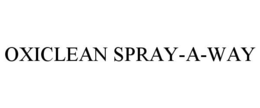
USPTO serial 77027212
OXICLEAN SPRAY-A-WAY
Reviewed by CopyMark Law Group
- Filing date
- Status date
- Registration date
- May 12, 2009
- Examiner
- SALEM-HOWEY, AISHA
- Law office
- PUBLICATION AND ISSUE SECTION
What this means
Status 710 means the registration was cancelled because a required Section 8 declaration of continued use was not filed within the deadline (including any grace period). The federal registration is no longer active. Evaluate filing a new application if you still use the mark, or petition if cancellation was erroneous. Consult counsel on remaining common-law rights.
Need help with OXICLEAN SPRAY-A-WAY?
If you own this trademark, we can monitor new filings and help with USPTO deadlines. If you do not, we can file a new U.S. application.
Owner
Attorney of record
The USPTO lists this attorney as the applicant's representative for correspondence on this application.
David J. Schuman
David J. Schuman CHURCH & DWIGHT CO., INC.500 Charles Ewing BoulevardLaw DepartmentEwing, NJ 08628Goods and services
| Class | Description | Status | First use |
|---|---|---|---|
| 003 | laundry pre-treatment for stains on fabrics, clothing, upholstery and linen; stain removal compounds sold in an application device, namely, pens, wands or atomizers containing laundry stain pre-treatment formulations and stain removers for direct application to stains for use on fabrics, clothing, upholstery and linen; cleaning preparations for use on fabrics, clothing, upholstery and linen; stain removers; spot removers | SECTION 8 - CANCELLED | Feb 28, 2007 |
Related trademarks
CopyMark links this record to cited §2(d) serials, the owner's other marks, Nice classes, similar mark names, and recently changed USPTO applications.
- Other trademarks owned by Church & Dwight Co., Inc.
- Other trademarks owned by Church & Dwight Co., Inc.
- Other trademarks owned by Church & Dwight Co., Inc.
- Other trademarks in Class 003
- Similar marks named OXICLEAN SPRAY-A-WAY
- Recently changed USPTO trademarks
- Recently filed trademarks
- Browse all trademark records
Prosecution history
| Date | Code | Event | What it means |
|---|---|---|---|
| Dec 18, 2015 | C8.. | CANCELLED SEC. 8 (6-YR) | — |
| Jan 21, 2013 | CHAN | APPLICANT/CORRESPONDENCE CHANGES (NON-RESPONSIVE) ENTERED | — |
| Jan 21, 2013 | COAR | TEAS CHANGE OF OWNER ADDRESS RECEIVED | — |
| Jan 18, 2013 | TCCA | TEAS CHANGE OF CORRESPONDENCE RECEIVED | — |
| May 12, 2009 | R.PR | REGISTERED-PRINCIPAL REGISTER | Your trademark is registered on the Principal Register — the strongest form of federal trademark protection. You may use the ® symbol for the covered goods and services. Maintenance filings (Section 8 and renewals) are required to keep the registration alive. |
| Apr 9, 2009 | REGV | LAW OFFICE REGISTRATION REVIEW COMPLETED | — |
| Apr 8, 2009 | CNPR | ALLOWED PRINCIPAL REGISTER - SOU ACCEPTED | — |
| Mar 21, 2009 | TEME | TEAS/EMAIL CORRESPONDENCE ENTERED | — |
| Mar 21, 2009 | CRFA | CORRESPONDENCE RECEIVED IN LAW OFFICE | — |
| Mar 21, 2009 | TROA | TEAS RESPONSE TO OFFICE ACTION RECEIVED | This event means the applicant filed a response to a USPTO Office Action — typically arguments, amendments, or evidence addressing the examiner's objections. The USPTO will review the response and either allow the mark to proceed or issue another action. |
| Mar 15, 2009 | GNRN | NOTIFICATION OF NON-FINAL ACTION E-MAILED | A non-final Office Action means the USPTO examining attorney has raised at least one issue with your trademark application but has not made a final decision. You usually have three months to respond with arguments, amendments, or evidence. Missing the deadline can abandon the application. |
| Mar 15, 2009 | GNRT | NON-FINAL ACTION E-MAILED | A non-final Office Action means the USPTO examining attorney has raised at least one issue with your trademark application but has not made a final decision. You usually have three months to respond with arguments, amendments, or evidence. Missing the deadline can abandon the application. |
| Mar 15, 2009 | CNRT | SU - NON-FINAL ACTION - WRITTEN | A non-final Office Action means the USPTO examining attorney has raised at least one issue with your trademark application but has not made a final decision. You usually have three months to respond with arguments, amendments, or evidence. Missing the deadline can abandon the application. |
| Feb 20, 2009 | SUPC | STATEMENT OF USE PROCESSING COMPLETE | — |
| Feb 20, 2009 | AITU | CASE ASSIGNED TO INTENT TO USE PARALEGAL | — |
| Feb 4, 2009 | IUAF | USE AMENDMENT FILED | — |
| Feb 4, 2009 | EISU | TEAS STATEMENT OF USE RECEIVED | The applicant filed a Statement of Use with specimens showing the mark in actual commerce. The USPTO will review the filing for compliance. If accepted, the mark can proceed to registration; if deficient, the USPTO may issue a requirement or office action. |
| Jan 2, 2009 | DOCK | ASSIGNED TO EXAMINER | — |
| Aug 12, 2008 | NOAM | NOA MAILED - SOU REQUIRED FROM APPLICANT | A Notice of Allowance means your intent-to-use application cleared examination and opposition but is not registered yet. You must file a Statement of Use showing the mark in commerce, or request an extension, before the deadline — usually six months from the notice date. |
| May 20, 2008 | PUBO | PUBLISHED FOR OPPOSITION | Your mark was published in the USPTO Official Gazette for a 30-day opposition window. During that period, third parties who believe they would be harmed can file an opposition. If no opposition is filed, prosecution usually continues toward registration or a Notice of Allowance. |
| Apr 30, 2008 | NPUB | NOTICE OF PUBLICATION | — |
| Apr 16, 2008 | PREV | LAW OFFICE PUBLICATION REVIEW COMPLETED | — |
| Apr 10, 2008 | CNSA | APPROVED FOR PUB - PRINCIPAL REGISTER | — |
| Apr 10, 2008 | TEME | TEAS/EMAIL CORRESPONDENCE ENTERED | — |
| Apr 10, 2008 | CRFA | CORRESPONDENCE RECEIVED IN LAW OFFICE | — |
| Apr 7, 2008 | ALIE | ASSIGNED TO LIE | — |
| Apr 3, 2008 | ERSI | TEAS RESPONSE TO SUSPENSION INQUIRY RECEIVED | — |
| Dec 13, 2007 | RCSC | REPORT COMPLETED SUSPENSION CHECK CASE STILL SUSPENDED | — |
| Jun 13, 2007 | RCSC | REPORT COMPLETED SUSPENSION CHECK CASE STILL SUSPENDED | — |
| Jun 12, 2007 | ALIE | ASSIGNED TO LIE | — |
| Dec 11, 2006 | GNSL | LETTER OF SUSPENSION E-MAILED | — |
| Dec 11, 2006 | CNSL | SUSPENSION LETTER WRITTEN | — |
| Dec 7, 2006 | DOCK | ASSIGNED TO EXAMINER | — |
| Oct 26, 2006 | NWAP | NEW APPLICATION ENTERED | — |