
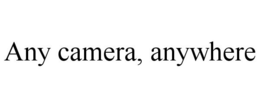
USPTO serial 77268639
ANY CAMERA, ANYWHERE
Reviewed by CopyMark Law Group
- Filing date
- Status date
- Registration date
- —
- Examiner
- MICHELI, ANGELA M
- Law office
- TMEG LAW OFFICE 101 - EXAMINING ATTORNEY ASSIGNED
What this means
These status codes mean the trademark application is abandoned and no longer pending. Common reasons include missing an Office Action response (600), filing without a valid basis (602), express abandonment by the applicant (604), or failure to respond to an examiner's inquiry (618). Revival may be possible in limited circumstances. If abandonment was unintentional, consult counsel about a petition to revive. Otherwise file a new application if protection is still needed.
Need help with ANY CAMERA, ANYWHERE?
If you own this trademark, we can monitor new filings and help with USPTO deadlines. If you do not, we can file a new U.S. application.
Owner
Goods and services
| Class | Description | Status | First use |
|---|---|---|---|
| 009 | Amplifier for wireless communications; Antennas for wireless communications apparatus; Computer hardware, namely, wireless access point (WAP) devices; Computer software for wireless content delivery; Devices for wireless radio transmission; Home and office automation systems comprising wireless and wired controllers, controlled devices, and software for lighting, HVAC, security, safety and other home and office monitoring and control applications; Integrated circuits and integrated circuit cores for use in wireless communications and wireless communication equipment and apparati and digital signal processors (DSP); Mobile computing and operating platforms consisting of data transceivers, wireless networks and gateways for collection and management of data; Reconfigurable processors for use in wireless communication handsets and network equipment in the field of wideband communications; Telematics apparatus, namely, wireless Internet devices which provide telematic services and have a cellular phone function; Wireless controller to monitor and control the functioning of other electronic devices; Wireless remote temperature and humidity monitors for building maintenance; Wireless television set for providing video conferencing and telephone service over the Internet; Automated self contained electronic surveillance devices that can be deployed to gather evidence or intelligence in remote locations; Electric and electronic video surveillance installations; Audio-video receivers; Building security systems comprising software and hardware for providing picture, video, alarm status, building plans, and other information to a remote station; Cinematographic cameras; Computer cameras; Computer software for use in the encryption and decryption of digital files, including audio, video, text, binary, still images, graphics and multimedia files; Computer software for use in the safeguarding of digital files, including audio, video, text, binary, still images, graphics and multimedia files; Digital cameras; Digital video recorders; Electronic scalers for audio and video signals; Electronic switchers for audio and video signals; Interface circuits for video cameras; Portable video cameras with built-in videocassette recorders; Receivers for IP Multicast over Wireless; Sound and video recording and playback machines; Telecommunications and data networking hardware, namely devices for transporting and aggregating voice, data, and video communications across multiple network infrastructures and communications protocols; Transmitters and receivers for audio and video signals for transmission over twisted pair cables; Vehicle safety equipment, namely, back-up sensors and cameras; Video cameras; Video capture cards; Video circuit boards; Video monitors; Video multiplexers; Video transmission apparatus; Videocameras | ACTIVE | Jan 1, 2007 |
Related trademarks
CopyMark links this record to cited §2(d) serials, the owner's other marks, Nice classes, similar mark names, and recently changed USPTO applications.
Prosecution history
| Date | Code | Event | What it means |
|---|---|---|---|
| Jul 16, 2008 | MAB2 | ABANDONMENT NOTICE MAILED - FAILURE TO RESPOND | The trademark application was abandoned because a required response or document was not filed by the deadline — usually a missed Office Action response. The application is dead unless a petition to revive is granted within a limited time. |
| Jul 15, 2008 | ABN2 | ABANDONMENT - FAILURE TO RESPOND OR LATE RESPONSE | The trademark application was abandoned because a required response or document was not filed by the deadline — usually a missed Office Action response. The application is dead unless a petition to revive is granted within a limited time. |
| Dec 9, 2007 | GNRN | NOTIFICATION OF NON-FINAL ACTION E-MAILED | A non-final Office Action means the USPTO examining attorney has raised at least one issue with your trademark application but has not made a final decision. You usually have three months to respond with arguments, amendments, or evidence. Missing the deadline can abandon the application. |
| Dec 9, 2007 | GNRT | NON-FINAL ACTION E-MAILED | A non-final Office Action means the USPTO examining attorney has raised at least one issue with your trademark application but has not made a final decision. You usually have three months to respond with arguments, amendments, or evidence. Missing the deadline can abandon the application. |
| Dec 9, 2007 | CNRT | NON-FINAL ACTION WRITTEN | A non-final Office Action means the USPTO examining attorney has raised at least one issue with your trademark application but has not made a final decision. You usually have three months to respond with arguments, amendments, or evidence. Missing the deadline can abandon the application. |
| Dec 6, 2007 | DOCK | ASSIGNED TO EXAMINER | — |
| Sep 5, 2007 | NWAP | NEW APPLICATION ENTERED | — |