
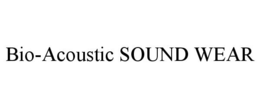
USPTO serial 85732349
BIO-ACOUSTIC SOUND WEAR
Reviewed by CopyMark Law Group
- Filing date
- Status date
- Registration date
- —
- Examiner
- STINE, DAVID
- Law office
- TMO LAW OFFICE 114 - EXAMINING ATTORNEY ASSIGNED
What this means
These status codes mean the trademark application is abandoned and no longer pending. Common reasons include missing an Office Action response (600), filing without a valid basis (602), express abandonment by the applicant (604), or failure to respond to an examiner's inquiry (618). Revival may be possible in limited circumstances. If abandonment was unintentional, consult counsel about a petition to revive. Otherwise file a new application if protection is still needed.
Need help with BIO-ACOUSTIC SOUND WEAR?
If you own this trademark, we can monitor new filings and help with USPTO deadlines. If you do not, we can file a new U.S. application.
Owner
Grand Cayman, KY
Goods and services
| Class | Description | Status | First use |
|---|---|---|---|
| 009 | Audio amplifiers; Audio circuit boards; Audio equipment for vehicles, namely, loud speakers for automotive audio systems; Audio headphones; Audio speakers; Audio-frequency transformers; Audio-receivers and video-receivers; Audio-video receivers; Bass speakers; Boxes specially adapted for housing audio equipment; Cases for music, audio and related electronic equipment, namely, cases for audio tuners, audio receivers, amplifiers, tape players, compact disc players, MP3 controllers/players, audio mixers, audio speakers in the nature of music studio monitors, microphones, audio speakers, compact discs, audio tapes, portable computers, antennas, phonographic record players, audio recording equipment, and the cables associated with all of the foregoing equipment; Computer game software for personal computers and home video game consoles; Computer hardware for communicating audio, video and data between computers via a global computer network, wide-area computer networks, and peer-to-peer computer networks; Computer software for controlling the operation of audio and video devices; Computer software for manipulating digital audio information for use in audio media applications; Computer software for use in the encryption and decryption of digital files, including audio, video, text, binary, still images, graphics and multimedia files; Computer software for use in the safeguarding of digital files, including audio, video, text, binary, still images, graphics and multimedia files; Computer software to control and improve computer and audio equipment sound quality; Conical attachment to an audio speaker for diffusing and distributing sound as it is transmitted from the speaker; Digital audio and video recorders and players; Digital audio players; Digital music system that synchronizes digital music files stored on a home unit and a car unit; Digital music systems that synchronizes digital radio files stored on a home unit, a car unit, or portable unit and that may be backed up to an internet depository; Downloadable audio files, multimedia files, text files, e-mails, written documents, audio material, video material and games featuring information in the form of downloadable short educational/training communications in the field of human resource development for the promotion of employee retention, career growth and increased productivity for employees and employers; Downloadable MP3 files, MP3 recordings, on-line discussion board posts, webcasts, webinars and podcasts featuring music, audio books in the field of music, broadcasts, and events, and news broadcasts; Earphones and headphones; Electric audio playback units; Electric audio playback units with lights and speakers; Headphones; Headphones including attached lanyard; Home theater products, namely, LCD; Loud speaker systems; Loud speakers; Music headphones; Personal headphones for sound transmitting apparatuses; Personal headphones for use with sound transmitting systems; Portable and handheld digital electronic devices for recording, organizing, transmitting, manipulating, and reviewing text, data, image, and audio files; Portable vibration speakers; Speaker enclosures; Speaker microphones; Stereo headphones; Telecommunications equipment, namely, fiber-optic transceivers, fiber optic repeaters, converters and optimizers, wave division multiplexers, free-space optics transmission systems, switches including Ethernet switches and routers, fiber-to-the-home and ethernet-over-VDSL access aggregators, terminators and repeaters, and remote presence management products, namely, switches, and console, alarm, sensor and power management devices; Wireless indoor and outdoor speakers | ACTIVE | — |
Related trademarks
CopyMark links this record to cited §2(d) serials, the owner's other marks, Nice classes, similar mark names, and recently changed USPTO applications.
Prosecution history
| Date | Code | Event | What it means |
|---|---|---|---|
| Aug 14, 2013 | MAB2 | ABANDONMENT NOTICE MAILED - FAILURE TO RESPOND | The trademark application was abandoned because a required response or document was not filed by the deadline — usually a missed Office Action response. The application is dead unless a petition to revive is granted within a limited time. |
| Aug 14, 2013 | ABN2 | ABANDONMENT - FAILURE TO RESPOND OR LATE RESPONSE | The trademark application was abandoned because a required response or document was not filed by the deadline — usually a missed Office Action response. The application is dead unless a petition to revive is granted within a limited time. |
| Jan 16, 2013 | GNRN | NOTIFICATION OF NON-FINAL ACTION E-MAILED | A non-final Office Action means the USPTO examining attorney has raised at least one issue with your trademark application but has not made a final decision. You usually have three months to respond with arguments, amendments, or evidence. Missing the deadline can abandon the application. |
| Jan 16, 2013 | GNRT | NON-FINAL ACTION E-MAILED | A non-final Office Action means the USPTO examining attorney has raised at least one issue with your trademark application but has not made a final decision. You usually have three months to respond with arguments, amendments, or evidence. Missing the deadline can abandon the application. |
| Jan 16, 2013 | CNRT | NON-FINAL ACTION WRITTEN | A non-final Office Action means the USPTO examining attorney has raised at least one issue with your trademark application but has not made a final decision. You usually have three months to respond with arguments, amendments, or evidence. Missing the deadline can abandon the application. |
| Jan 14, 2013 | DOCK | ASSIGNED TO EXAMINER | — |
| Sep 21, 2012 | NWOS | NEW APPLICATION OFFICE SUPPLIED DATA ENTERED | — |
| Sep 21, 2012 | NWAP | NEW APPLICATION ENTERED | — |