
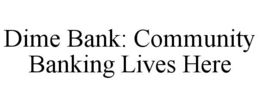
USPTO serial 90563179
DIME BANK: COMMUNITY BANKING LIVES HERE
Reviewed by CopyMark Law Group
- Filing date
- Status date
- Registration date
- —
- Examiner
- CASTRO, GIANCARLO
- Law office
- TMO LAW OFFICE 110 - EXAMINING ATTORNEY ASSIGNED
What this means
These status codes mean the trademark application is abandoned and no longer pending. Common reasons include missing an Office Action response (600), filing without a valid basis (602), express abandonment by the applicant (604), or failure to respond to an examiner's inquiry (618). Revival may be possible in limited circumstances. If abandonment was unintentional, consult counsel about a petition to revive. Otherwise file a new application if protection is still needed.
Need help with DIME BANK: COMMUNITY BANKING LIVES HERE?
If you own this trademark, we can monitor new filings and help with USPTO deadlines. If you do not, we can file a new U.S. application.
Owner
Norwich, CT
Attorney of record
The USPTO lists this attorney as the applicant's representative for correspondence on this application.
Steven M McHugh.
Steven M McHugh. TOBIN, CARBERRY, O'MALLEY, RILEY & SELINGER, PC43 BROAD STREETNEW LONDON, CT 06320UNITED STATESGoods and services
| Class | Description | Status | First use |
|---|---|---|---|
| 036 | Banking; Financial services rendered in connection with the issuance, receipt and transfer of lines of credit, namely, credit processing services; Financial services, namely, administration of transactions involving funds drawn from securities, stocks, funds, equities, bonds, cash, or other types of financial investments in retirement plans using a check or negotiable order of withdrawal over a global data network; Financial services, namely, administration of transactions involving funds drawn from securities, stocks, funds, equities, bonds, cash, or other types of financial investments in retirement plans using a credit or debit card over a global data network; Financial services, namely, assisting others with the completion of financial transactions for stocks, bonds, securities and equities; Financial services, namely, conducting an online exchange of interest rate products via the internet and intranet systems; Financial services, namely, corporate workout, debt restructuring, receivership, and loan resolution for commercial loans; Financial services, namely, electronic remote check deposit services; Financial services, namely, estate settlement services; Financial services, namely, funding online cash accounts from prepaid cash cards, bank accounts and credit card accounts; Financial services, namely, investment fund transfer and transaction services; Financial services, namely, issuance and management of certificates backed by loan portfolios which are subsequently managed to insure the integrity of the certificates; Financial services, namely, microfinance lending services; Financial services, namely, money lending; Financial services, namely, mortgage planning; Financial services, namely, mortgage refinancing; Financial services, namely, vehicle title loans; Financial custody services, namely, maintaining possession of financial assets for others for financial management purposes; Financial retirement plan consulting services; Financial transaction services, namely, providing secure commercial transactions and payment options; Financial transaction services, namely, providing secure commercial transactions and payment options using a mobile device at a point of sale | ACTIVE | — |
Related trademarks
CopyMark links this record to cited §2(d) serials, the owner's other marks, Nice classes, similar mark names, and recently changed USPTO applications.
Prosecution history
| Date | Code | Event | What it means |
|---|---|---|---|
| Sep 6, 2023 | MAB2 | ABANDONMENT NOTICE E-MAILED - FAILURE TO RESPOND | The trademark application was abandoned because a required response or document was not filed by the deadline — usually a missed Office Action response. The application is dead unless a petition to revive is granted within a limited time. |
| Sep 5, 2023 | MAB2 | ABANDONMENT NOTICE MAILED - FAILURE TO RESPOND | The trademark application was abandoned because a required response or document was not filed by the deadline — usually a missed Office Action response. The application is dead unless a petition to revive is granted within a limited time. |
| Sep 5, 2023 | ABN2 | ABANDONMENT - FAILURE TO RESPOND OR LATE RESPONSE | The trademark application was abandoned because a required response or document was not filed by the deadline — usually a missed Office Action response. The application is dead unless a petition to revive is granted within a limited time. |
| Apr 24, 2023 | GNRN | NOTIFICATION OF NON-FINAL ACTION E-MAILED | A non-final Office Action means the USPTO examining attorney has raised at least one issue with your trademark application but has not made a final decision. You usually have three months to respond with arguments, amendments, or evidence. Missing the deadline can abandon the application. |
| Apr 24, 2023 | GNRT | NON-FINAL ACTION E-MAILED | A non-final Office Action means the USPTO examining attorney has raised at least one issue with your trademark application but has not made a final decision. You usually have three months to respond with arguments, amendments, or evidence. Missing the deadline can abandon the application. |
| Apr 24, 2023 | CNRT | NON-FINAL ACTION WRITTEN | A non-final Office Action means the USPTO examining attorney has raised at least one issue with your trademark application but has not made a final decision. You usually have three months to respond with arguments, amendments, or evidence. Missing the deadline can abandon the application. |
| Aug 8, 2022 | RCCK | SUSPENSION CHECKED - TO ATTORNEY FOR ACTION | — |
| Feb 3, 2022 | GNS3 | NOTIFICATION OF LETTER OF SUSPENSION E-MAILED | — |
| Feb 3, 2022 | GNSL | LETTER OF SUSPENSION E-MAILED | — |
| Feb 3, 2022 | CNSL | SUSPENSION LETTER WRITTEN | — |
| Jan 6, 2022 | TEME | TEAS/EMAIL CORRESPONDENCE ENTERED | — |
| Jan 6, 2022 | CRFA | CORRESPONDENCE RECEIVED IN LAW OFFICE | — |
| Jan 6, 2022 | TROA | TEAS RESPONSE TO OFFICE ACTION RECEIVED | This event means the applicant filed a response to a USPTO Office Action — typically arguments, amendments, or evidence addressing the examiner's objections. The USPTO will review the response and either allow the mark to proceed or issue another action. |
| Oct 1, 2021 | GNRN | NOTIFICATION OF NON-FINAL ACTION E-MAILED | A non-final Office Action means the USPTO examining attorney has raised at least one issue with your trademark application but has not made a final decision. You usually have three months to respond with arguments, amendments, or evidence. Missing the deadline can abandon the application. |
| Oct 1, 2021 | GNRT | NON-FINAL ACTION E-MAILED | A non-final Office Action means the USPTO examining attorney has raised at least one issue with your trademark application but has not made a final decision. You usually have three months to respond with arguments, amendments, or evidence. Missing the deadline can abandon the application. |
| Oct 1, 2021 | CNRT | NON-FINAL ACTION WRITTEN | A non-final Office Action means the USPTO examining attorney has raised at least one issue with your trademark application but has not made a final decision. You usually have three months to respond with arguments, amendments, or evidence. Missing the deadline can abandon the application. |
| Sep 27, 2021 | DOCK | ASSIGNED TO EXAMINER | — |
| Jun 5, 2021 | NWOS | NEW APPLICATION OFFICE SUPPLIED DATA ENTERED | — |
| Mar 9, 2021 | NWAP | NEW APPLICATION ENTERED | — |