
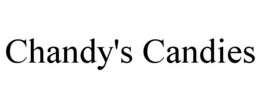
USPTO serial 90756940
CHANDY'S CANDIES
Reviewed by CopyMark Law Group
- Filing date
- Status date
- Registration date
- May 24, 2022
- Examiner
- FOX III, LYAL L
- Law office
- PUBLICATION AND ISSUE SECTION
What this means
Status 700 means the trademark is registered and active on the Principal Register. You have nationwide rights for the listed goods and services and may use ®. Section 8 maintenance is due between years five and six. Calendar Section 8 between years five and six, and consider trademark monitoring.
Need help with CHANDY'S CANDIES?
If you own this trademark, we can monitor new filings and help with USPTO deadlines. If you do not, we can file a new U.S. application.
Current trademark owner
Monitor this mark, or talk with CopyMark about this registration.
Not the owner?
File a new U.S. trademark application, or speak with our attorneys.
Owner
Goods and services
| Class | Description | Status | First use |
|---|---|---|---|
| 030 | Candy; Candy bark; Candy bars; Candy mints; Candy with caramel; Candy with cocoa; Chocolate candies; Chocolates and chocolate-based ready to eat candies and snacks; Confectionery, namely, candy and chocolate; Cotton candy; Gummy candies; Hard candies; Hard candy; Starch-based candies | ACTIVE | Dec 1, 2017 |
Related trademarks
CopyMark links this record to cited §2(d) serials, the owner's other marks, Nice classes, similar mark names, and recently changed USPTO applications.
Prosecution history
| Date | Code | Event | What it means |
|---|---|---|---|
| May 24, 2022 | NRCS | NOTICE OF REGISTRATION CONFIRMATION EMAILED | — |
| May 24, 2022 | R.SR | REGISTERED-SUPPLEMENTAL REGISTER | Your mark is registered on the Supplemental Register, which is available for marks that are not yet distinctive enough for the Principal Register but can still identify a source. Protection is more limited than Principal Register registration but can later support a Principal Register application. |
| Apr 13, 2022 | PREV | LAW OFFICE PUBLICATION REVIEW COMPLETED | — |
| Apr 9, 2022 | CNTA | APPROVED FOR REGISTRATION SUPPLEMENTAL REGISTER | — |
| Apr 8, 2022 | XAEC | EXAMINER'S AMENDMENT ENTERED | — |
| Apr 8, 2022 | GNEN | NOTIFICATION OF EXAMINERS AMENDMENT E-MAILED | — |
| Apr 8, 2022 | GNEA | EXAMINERS AMENDMENT E-MAILED | — |
| Apr 8, 2022 | CNEA | EXAMINERS AMENDMENT -WRITTEN | — |
| Apr 8, 2022 | DOCK | ASSIGNED TO EXAMINER | — |
| Mar 14, 2022 | TEME | TEAS/EMAIL CORRESPONDENCE ENTERED | — |
| Mar 14, 2022 | CRFA | CORRESPONDENCE RECEIVED IN LAW OFFICE | — |
| Mar 14, 2022 | ALIE | ASSIGNED TO LIE | — |
| Feb 24, 2022 | TROA | TEAS RESPONSE TO OFFICE ACTION RECEIVED | This event means the applicant filed a response to a USPTO Office Action — typically arguments, amendments, or evidence addressing the examiner's objections. The USPTO will review the response and either allow the mark to proceed or issue another action. |
| Feb 23, 2022 | GNRN | NOTIFICATION OF NON-FINAL ACTION E-MAILED | A non-final Office Action means the USPTO examining attorney has raised at least one issue with your trademark application but has not made a final decision. You usually have three months to respond with arguments, amendments, or evidence. Missing the deadline can abandon the application. |
| Feb 23, 2022 | GNRT | NON-FINAL ACTION E-MAILED | A non-final Office Action means the USPTO examining attorney has raised at least one issue with your trademark application but has not made a final decision. You usually have three months to respond with arguments, amendments, or evidence. Missing the deadline can abandon the application. |
| Feb 23, 2022 | CNRT | NON-FINAL ACTION WRITTEN | A non-final Office Action means the USPTO examining attorney has raised at least one issue with your trademark application but has not made a final decision. You usually have three months to respond with arguments, amendments, or evidence. Missing the deadline can abandon the application. |
| Feb 23, 2022 | DOCK | ASSIGNED TO EXAMINER | — |
| Aug 26, 2021 | NWOS | NEW APPLICATION OFFICE SUPPLIED DATA ENTERED | — |
| Jun 9, 2021 | NWAP | NEW APPLICATION ENTERED | — |